


SCENE: Am Rothenbaum Arena, Hamburg
DATE: May 2003
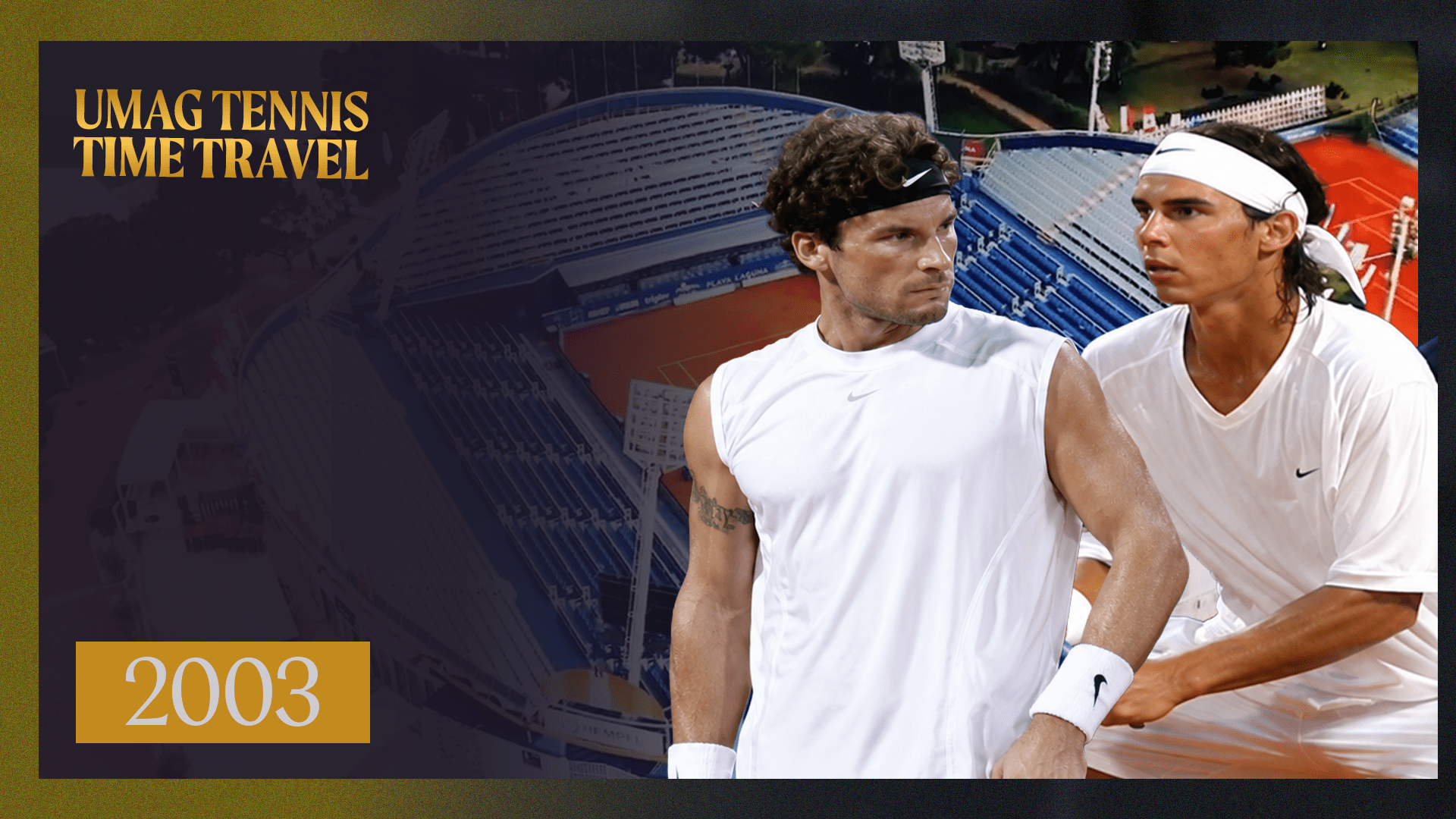
The Hamburg ATP event, still carrying its Masters status at the time, brought together in the second round two men from Mallorca, the central figures of this new chapter of our Time Travel.
A tournament with a tradition stretching over 130 years had long served as the ultimate dress rehearsal for Roland Garros. On this occasion, it became the stage for their first official encounter, and the beginning of a special bond that would evolve over the years, layering itself into something far greater than tennis, something that would ultimately grow into a profound friendship.
“Tio, sorry I beat you,” said a shy 16-year-old from Manacor at the net in Hamburg, known to the wider tennis world then only by his full name, Rafael Nadal.
Carlos Moyá, ten years his senior, already an established former world No. 1 and Roland Garros champion, took no offence. He had known the boy who defeated him 7–5, 6–4 that day, despite not playing his best tennis, as he would later admit, since the age of eleven. From the shadows, he gradually assumed the role of protector, a presence closer to that of an older brother than a conventional coach or mentor.“I was more nervous than him that day. I felt incredible pressure. I was in the top 10, and he was around 300 in the world or something like that (ed. Nadal was No. 87). Losing would have been embarrassing…” Moyá would recall years later, fully aware that he had been facing a very different kind of opponent.
His chance for revenge would come quickly, just two months later, on the clay of Umag, against the teenager to whom, legend has it, he had personally secured a wildcard entry.
THE 2003 TOURNAMENT
As was tradition, the player field drew enormous attention. Looking back with historical distance, the Spanish contingent may never have arrived with three such formidable names. The third among them was David Ferrer, future world No. 3 and winner of 27 ATP titles.
Among many highlights in his career, Ferrer reached the Roland Garros final in 2013, where he was stopped by none other than Nadal. He returned to Umag often, almost masochistically chasing success against the “King of Umag,” only to fall short each time. Moyá defeated him four times in five appearances in Umag, including a dominant 2002 final (6–2, 6–3). Before even facing Nadal, Moyá dismantled Ferrer once again in 2003, conceding just three games.
Among the other notable names was Argentina’s Mariano Puerta, the 2000 finalist. He too would fall to Nadal, who two years later would hand him the most painful defeat of his career in the Roland Garros final, claiming his first Grand Slam title and igniting an era of unprecedented dominance.
Nadal showed no mercy to Sweden’s Magnus Norman either, a former world No. 2 and French Open finalist, who would later become one of the most respected coaches of his generation. Best known for guiding Stan Wawrinka to three Grand Slam titles, Norman could hardly have imagined that inside the Umag locker room he was sharing space with wonderkids destined to shape the future of tennis.
Wawrinka himself, whose cult status in Umag we will explore later in this series, made his debut that very year with a wildcard.
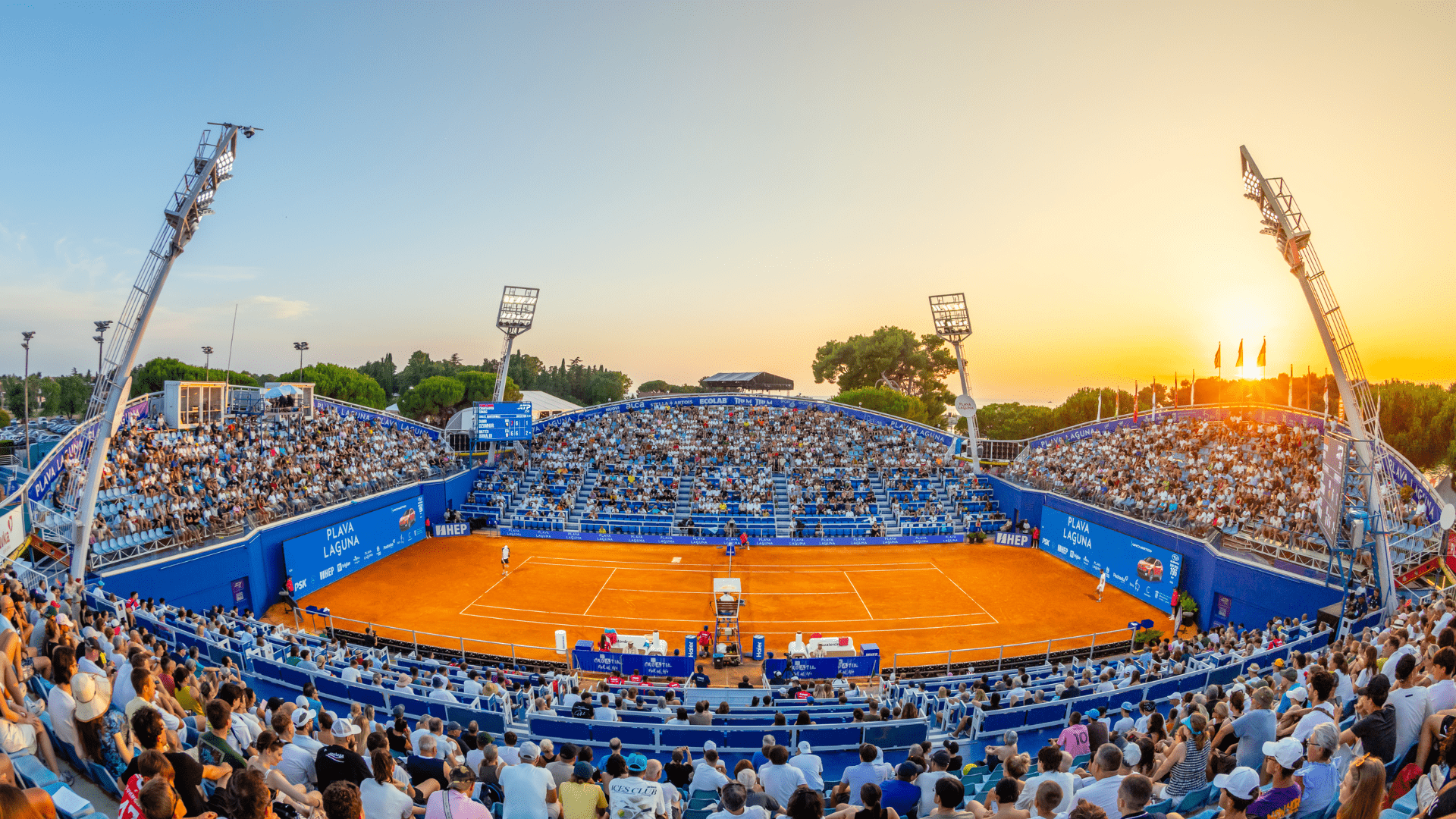
The wheel of destiny in Umag was spinning at full speed. Stella Maris once again proved it was far more than just another stop on the calendar. It is a crossroads of paths, a place where legends are born and careers begin to shine.
And finally, a wildcard was also granted to Croatia’s Ivo Karlovic, later known as the “Giant from Salata,” a truly unique figure in the history of the game.
THE MATCH – MOYÁ DEFENDS HIS HOUSE
In a competitive clash where, even from a bird’s-eye view, Nadal’s talent was impossible to ignore, Moyá stepped onto the court determined not to relive Hamburg. In Umag, the home he had helped build, he would not allow it. Not here.
Aggressive, precise and classically elegant in style, he prevailed 6–4, 6–4.
Despite the loss, Rafael Nadal left Umag that summer with a trophy, winning the doubles title alongside Álex López Morón. Once again, Umag marked a beginning, etching itself onto the first page of the story of one of the greatest players of all time.
At first glance, his physical presence evoked that of a warrior, and his game followed that very spirit. Tennis had never seen a fighter like him, a player who refused to surrender a single point, who never entertained the idea of giving up, even as his medical record would grow to the size of a multi-volume encyclopedia.
Less known is that Nadal returned to Umag in 2005, set to be the top seed shortly after winning his first Roland Garros. Prevented from playing due to injury, he still made the effort to come and greet the crowd on Centre Court. It was yet another powerful affirmation of the unique bond between player and tournament, built on mutual respect and something deeper still, reinforced by the presence of Carlos Moyá, a man who embodied loyalty to Umag like no other.
After this victory, Moyá completed the job, defeating Italy’s Filippo Volandri in the final. For Charlie as he was affectionately known, it was his third consecutive title and fourth overall, and not the last. In those years, Umag danced entirely to his rhythm.
FIFTY KILOMETRES THAT CHANGED TENNIS
The Balearic island of Mallorca, famed for its beauty and tourism, hides a remarkable sporting anomaly. Within a distance of just fifty kilometres, two icons were born, each redefining modern Spanish tennis in their own way.
During their formative years, the island lacked the infrastructure required for a breakthrough at the highest level. Both Moyá and Nadal therefore shaped key stages of their development in Barcelona, under the umbrella of the legendary RCT Barcelona, home to the famous ATP tournament. Founded in 1899, the club has long been a nucleus of Spanish tennis excellence.
What young Rafa lacked on Mallorca, despite the dedication of his local coaches, Carlos sought to provide. Moyá once spoke openly about how harsh his own entry into the professional locker room had been. He recalled how Pete Sampras, his opponent in the 1997 Australian Open final, did not exchange a single word with him, something Moyá considered typical of the era’s leaders. He chose a different path with his young compatriot.
“Rafa simply didn’t have professional sparring partners on Mallorca. That’s why I tried to make myself available to him as much as possible,” Moyá revealed.
They never forgot their island. They returned after their greatest victories, giving back their legends to museums and receiving the enduring gratitude of their homeland. The peak of that island-wide euphoria came after their Davis Cup triumph in 2004, when the streets of Mallorca bowed to them.
Today, Manacor is home to the Rafa Nadal Academy, a state-of-the-art centre where elite training and education merge to create ideal conditions for future generations.
FROM BIG BROTHER TO FINAL COACH
“When Rafa was fifteen, we were at dinner at Carlos Moyá’s house. He asked me if I would sign for Rafa to have a career like Albert Costa’s. I said no. Then he asked if I would sign for him to reach my achievements. World No. 1, multiple Grand Slam finals — yes, I said. But once we left and stood outside, I turned to Rafa and said: actually, I wouldn’t sign for that either.”
The anecdote comes from Toni Nadal, Rafa’s uncle and the man most responsible for shaping one of the greatest champions the sport has ever seen.
Yet Toni, demanding and relentless, who instilled in Rafa an almost ascetic mentality, was not the one who guided him through the final chapter of his career.
RAFA’S FINAL EVOLUTION WITH MOYÁ IN HIS CORNER
It was Moyá, the same friend and protector who once lobbied for Rafa’s wildcards - “Trust me, this kid will be something special…” - who always found time for practice sessions whenever the relentless ATP schedule allowed.
Carlos could deeply relate to Rafa’s growing struggles with injuries, a factor that had also limited his own career peaks.
The next defining moment in their shared story happened, as they would later recount, on Moyá’s couch. There, Carlos convinced Rafa he could still compete at the very top, even after two seasons without a Grand Slam title, an eternity in his terms.
Taking over a player many considered worn out, Moyá introduced fundamental changes to both training methodology and playing philosophy, effectively buying Rafa extra years on tour. Leaner, more flexible, with an improved backhand and serve, and a clear intent to shorten points, Nadal launched one final charge that would yield eight more Grand Slam titles.
‘’Coaching Rafa was a privilege. I doubt I will ever experience anything like it again. None of it would have been possible without friendship and respect,” Moyá reflected.
He never hid his admiration for the legend he helped shape, especially for the mental strength of a man who simply refused to give in.
In the end, it was his great friend who stood by him as he said goodbye to tennis, and it was Moyá’s voice that narrated the official tribute video that travelled the world.
“On court, you know it will be a fight. I would trust him with my life.”
.jpg)
.png)
.png)